Think about it, what are some of the activities you do within the first hour of waking up? Drink water? Exercise? Meditate? Did you think about visiting the toilet? You probably did, or maybe you did not.
As the world marked the World Toilet Day this week, we were reminded that toilets are a necessity in our daily lives. The theme for 2025 highlights an uncomfortable truth: no matter how much the world changes, access to proper sanitation remains essential, and “We’ll Always Need the Toilet.”
The global sanitation landscape
It is unfortunate that for some people and in some communities, a good and decent toilet is a luxury. Some glaring statistics as at 2024 indicate that, globally:
- 4 billion people lacked private toilets with safely managed sanitation.
- 555 million people used facilities that do not safely separate waste from human contact.
- 354 million people still practiced open defecation (1). Open defecation and the use of unimproved sanitation facilities exposes communities to infectious diseases such as cholera, diarrhea, and dysentery.
In sub-Saharan Africa alone, the challenge is widely-felt although some progress has been made between 2000 and 2024. In Kenya, for example, the proportion of people using unimproved sanitation facilities dropped from 32% to 26%, while open defecation reduced from 10% to 6% (1). These gains are largely due to ongoing global and national WASH interventions. However, this progress remains slow, especially in low-income urban settlements, where WASH infrastructure and services do not develop at the same rate as population growth.
Insights from WASH studies at APHRC
Our studies under the PROMISE, ANIPATH, and PATHOME projects provide deeper understanding of the environmental and health implications of inadequate sanitation. Currently, the Water, Sanitation and Hygiene (WASH) research team at APHRC is implementing the PROMISE study in low-income areas of Kibera. The study aims to evaluate the effectiveness of sanitation technologies in reducing environmental E. coli. The findings so far show that having a toilet is not just about having a structure, but also about dignity, privacy, and safety against environmental contamination. Whereas some households in the low-income areas lack sanitation facilities, others have poorly constructed sanitation facilities. These poorly constructed sanitation facilities leak, overflow, or spill, releasing fecal pathogens into the environment especially during extended rainy seasons and exposing communities to health risks and environmental hazards.
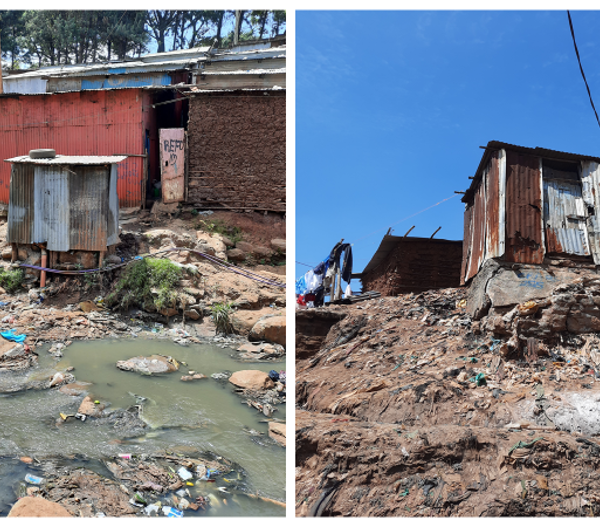
Figure 1: Images showing two sanitation facilities (toilets) used in one of our study areas
The ANIPATH study assessed the role of domestic animals in contributing to unimproved sanitation practices and perceived health risks. This study revealed that even in regions already certified and declared as Open Defecation-Free (ODF), open defecation and open disposal of diapers containing children’s waste is still practiced in some communities. Human feces were observed in open spaces, which is indicative of cultural or behavioral practices that contribute to environmental contamination especially in areas with limited access to toilets and hygiene facilities[1].
Finally, findings from the PATHOME study in Kisumu and Nairobi revealed that the prevalence of reported diarrhea among children remains high at about 9.5% in Kisumu and 13.8% in Nairobi, with laboratory analyses detecting bacteria such as E. coli, Salmonella, Listeria and Shigella in environmental samples such as water and soil (2,3).
What does this mean?
Unsafe sanitation and the poor containment and disposal of human waste can contaminate the environment and create ideal conditions for the spread of infectious pathogens. These pathogens drive disease outbreaks, increase the overall disease burden, and contribute to preventable deaths, especially among children under five. Toilets, therefore, are far more than physical structures. They are foundational to public health, crucial for protecting the environment, essential for preserving human dignity, and integral to safeguarding basic human rights.
The way forward
Improving access to safe sanitation is a multi-sector effort. It’s not just about constructing toilets but about ensuring they work properly, are used correctly, and are part of broader environmental hygiene strategies.
Some science-based, integrated solutions include:
- Investing in resilient WASH Infrastructure that ensures proper containment and disposal of human waste: From affordable, eco-friendly toilets in informal settlements to resilient sanitation systems that can withstand extreme weather events.
- Exploring innovative sanitation technologies that can be adopted in both urban and rural areas, including the hard-to-reach areas.
- Promoting behavior change through community engagement awareness campaigns on good sanitation and hygiene practices such as proper disposal of diapers or child feces and hygiene practices such as handwashing with soap
- Continuous environmental monitoring and research which are key to understand pathogen pathways, environmental contamination, and system performance, informing targeted interventions.
A call for action
The world toilet day reminds us that sanitation is a shared responsibility; all stakeholders, including international organizations, governments, communities, scientists, and individuals must collaborate to turn the tide on the current sanitation challenges. It is a reminder that sanitation is a fundamental right and is key to health and safety. We should invest in better infrastructure, promote good hygiene practices, and develop innovative solutions to prevent environmental contamination, and no one should have to live without a toilet or worry about their safety and health because of poor sanitation.
We all should commit to building a healthier, cleaner, and more equitable world; where everyone, everywhere, can say with confidence: ‘I have a safe, dignified toilet.’ We need to act; because no matter how much the world changes, we’ll always need the toilet.
Conclusion
As we reflect on this theme “We’ll Always Need the Toilet,” we should acknowledge that access to safe sanitation is more than a convenience; it’s a fundamental human right and an important aspect of sustainable development. Science is clear; improving sanitation protects environments by reducing contamination, results in less disease occurrence, and upholds human dignity.
References
- WHO & UNICEF. Progress on Household Drinking Water, Sanitation and Hygiene 2000-2024. UNICEF journal. 2024.
- Baker KK, Simiyu S, Busienei P, Gutema FD, Okoth B, Agira J, et al. Protocol for the PATHOME study: a cohort study on urban societal development and the ecology of enteric disease transmission among infants, domestic animals and the environment. BMJ Open. 2023;13(11):1–16.
- Gutema FD, Okoth B, Agira J, Amondi CS, Busienei PJ, Simiyu S, et al. Spatial – Temporal Patterns in the Enteric Pathogen Contamination of Soil in the Public Environments of Low- and Middle-Income Neighborhoods in Nairobi , Kenya. Int J Environ Res Public Health. 2024;21(1351):1–19.