More Than a Meal: How School Feeding Can Lift Local Producers and Local Diets
- Nutrition and Food Systems(NFS), Synergy
For millions of learners across East Africa, a school meal is often the most reliable meal of the day. As well as improving school enrolment and attendance, school meals address nutrition outcomes by tackling malnutrition at a critical stage of growth. School feeding programs (SFPs) can do more than support education and nutrition outcomes. When designed deliberately, they can also strengthen local food systems, improve diets, and support livelihoods.
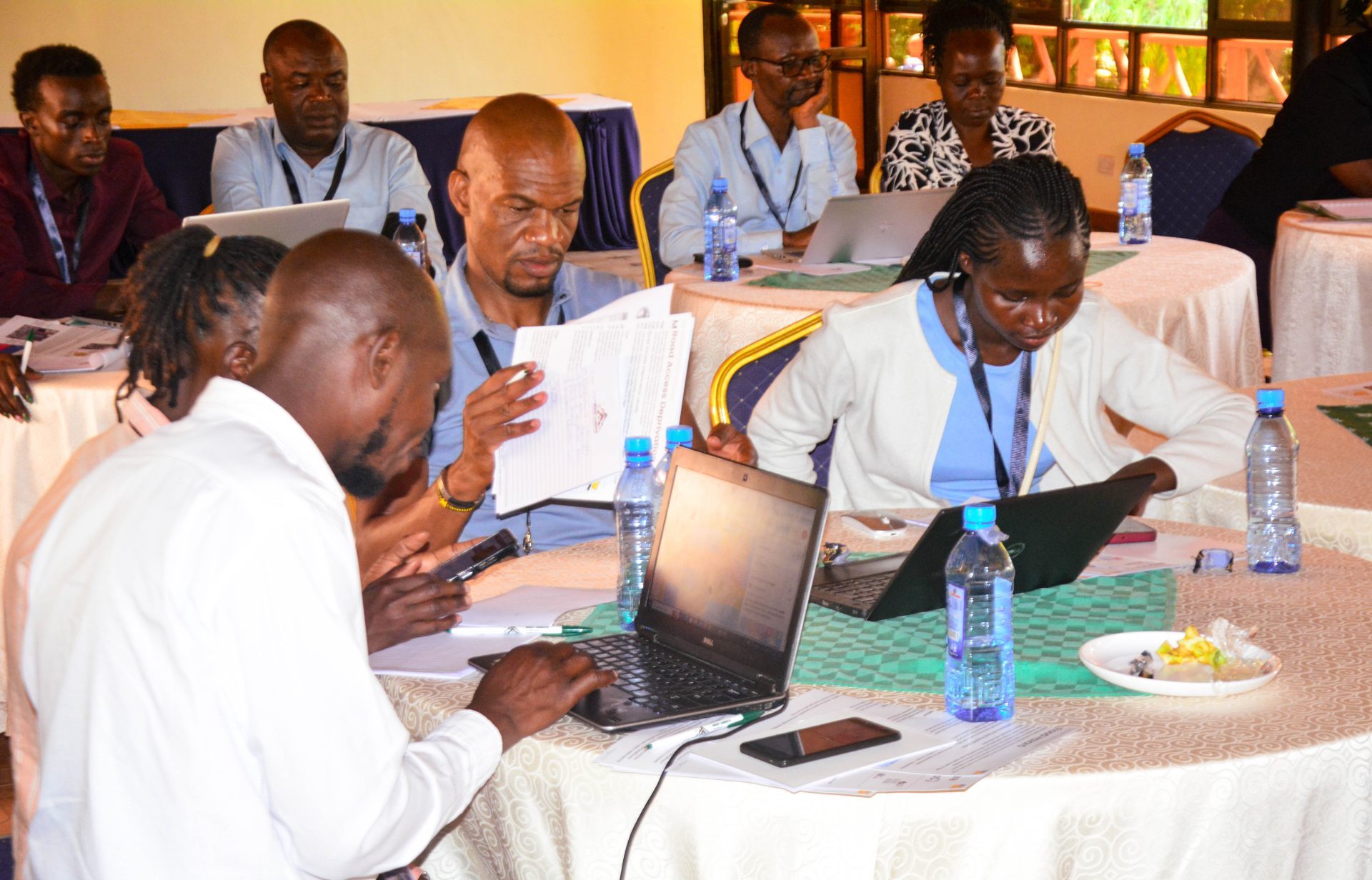
Exploring exactly how these wider community benefits can be achieved through the school feeding was at the heart of a recent cross-country learning webinar convened at the end of 2025 by the African Population and Health Research Center (APHRC), Imperial College London, Wasafiri, and the University of Rwanda. Working under the Catalyzing Change for Healthy and Sustainable Food Systems (CCHeFS) initiative, these partners worked together to assess how SFPs in Kenya and Rwanda can contribute to more inclusive and resilient food systems. The webinar brought together policymakers, researchers, and practitioners from Ethiopia, Kenya, and Rwanda to discuss how school feeding systems could better support nutritious diets while strengthening local food economies.
School Feeding at Crossroads
Across the continent, food systems are under strain. Many children – particularly in low-income and informal urban settings (such as unplanned urban neighborhoods) – have limited access to diverse, nutritious diets, while schools often rely on meals that are heavily cereal-based and low in micronutrients. At the same time, local food producers and small enterprises continue to face challenges accessing stable markets. School feeding sits at the intersection of education, agriculture, health & nutrition, and social protection. As several webinar participants noted, this makes it a uniquely powerful policy lever – but only if nutrition and local sourcing are treated as core design features rather than secondary considerations. “The issue of school feeding is very important. It’s an issue of human rights,” said Dr. Elizabeth Kimani-Murage of APHRC. “By promoting school feeding, we encourage children to be in school, and we promote the health and well-being of society.”
An Overlooked Link: Small Producers and School Food
One of the clearest insights to emerge from the webinar was the persistent exclusion of micro and small enterprises (MSEs) and smallholder farmers (SHFs) from school food supply chains. These actors supply a substantial share of fresh and nutritious foods across East Africa, yet they are often locked out of large public procurement systems. Discussion during the webinar highlighted several common barriers: centralized and complex tendering systems, stringent compliance requirements, limited access to capital, and weak business support structures. These challenges make it difficult for smaller suppliers to compete with larger firms, even when they are well placed to provide fresh, locally-produced food.
What Kenya and Rwanda Illustrate
The webinar focused in particular on promoting access to healthy and sustainable food in schools in Kenya and Rwanda – and the two countries offer contrasting but complementary lessons. In Kenya, school feeding operates through a mix of national, county, and partner-led models. County initiatives such as Nairobi’s Dishi na County program demonstrate how large-scale delivery can improve attendance and reduce absenteeism, while creating potential entry points for local sourcing. However, webinar participants noted that without clear policy guidance, these opportunities risk bypassing small-scale producers. In Rwanda, a more centralized national SFP has rapidly expanded coverage and investment, contributing to improved education outcomes. Yet discussions highlighted that menus often prioritize affordability over dietary diversity, limiting nutritional gains. Rigid procurement arrangements can also constrain schools’ ability to source fresh, locally- produced foods. Across both contexts, the lesson was clear: scale and political commitment matter, but design choices around procurement and menus ultimately determine whether school feeding supports healthier diets and inclusive local economies.
Learning From Elsewhere
Participants also reflected on international experience, including Brazil’s long-standing requirement that schools procure a minimum share of food from local farmers. This policy has helped improve meal diversity while providing predictable markets for small producers. While contexts differ, the example prompted discussion about how clearer procurement rules in Kenya and Rwanda could translate policy ambition into practical outcomes. “Policies talk about local sourcing,” observed Dr. Jacqueline Kung’u of APHRC, “but they don’t always address how SHFs and MSEs should actually be involved in school food supply chains.”
What this means for policy and practice
Three priorities emerged clearly from the webinar discussion:
- First, school feeding systems need clear and inclusive procurement pathways that enable smaller suppliers to participate, supported by training, aggregation mechanisms, and access to finance.
- Second, improving the nutritional quality of school meals requires enabling schools to diversify their food baskets, rather than relying on a narrow range of low-cost staples.
- Finally, stronger coordination across education, agriculture, health & nutrition, and trade sectors is essential if school feeding is to deliver on its full potential.
With deliberate policy choices, school feeding can evolve from a social safety net into a driver of healthier diets and more resilient local food systems. The webinar underscored that the opportunity is real – but realizing it will depend on whether learning translates into action.
You can find the full webinar recording here.